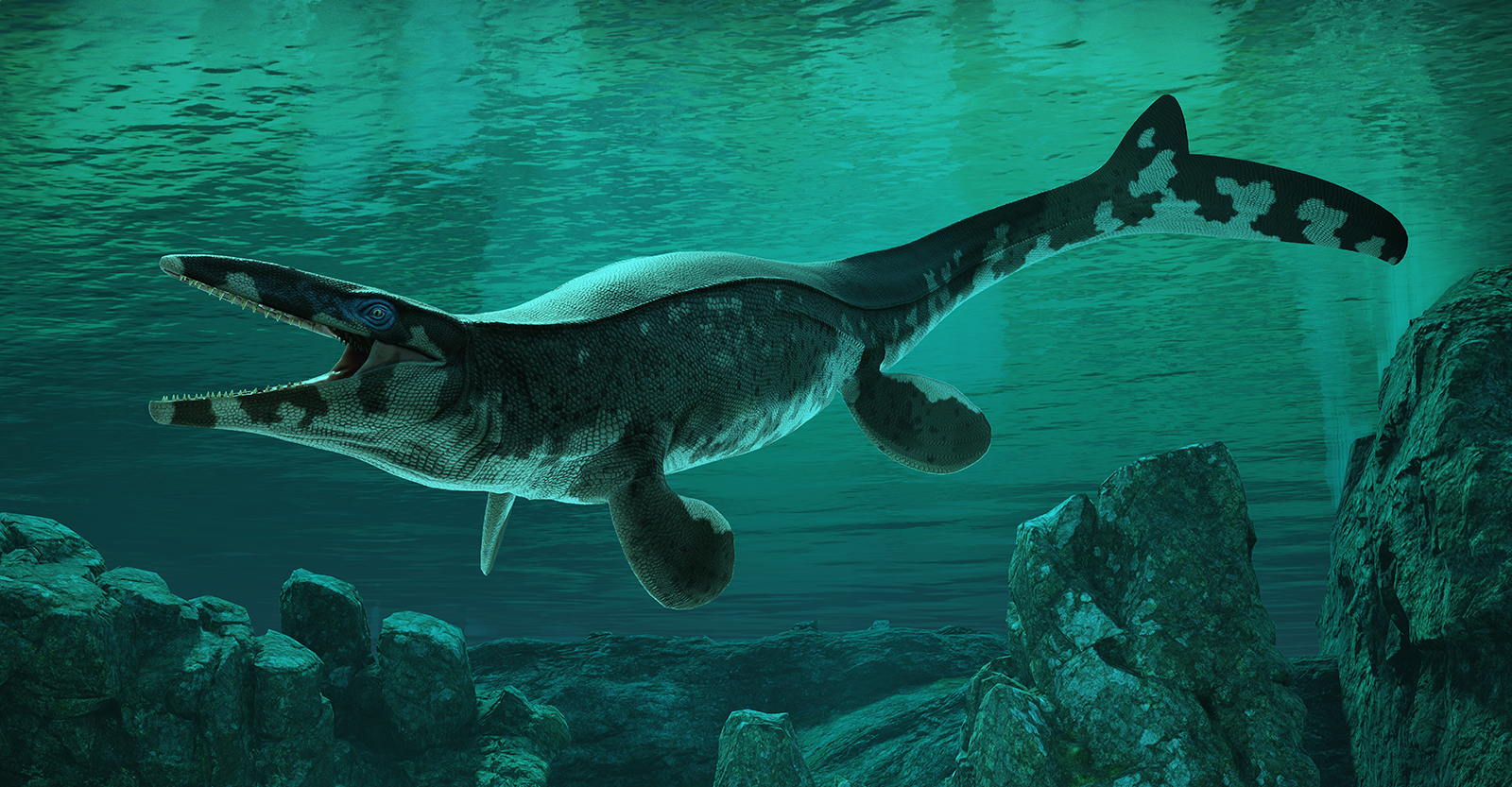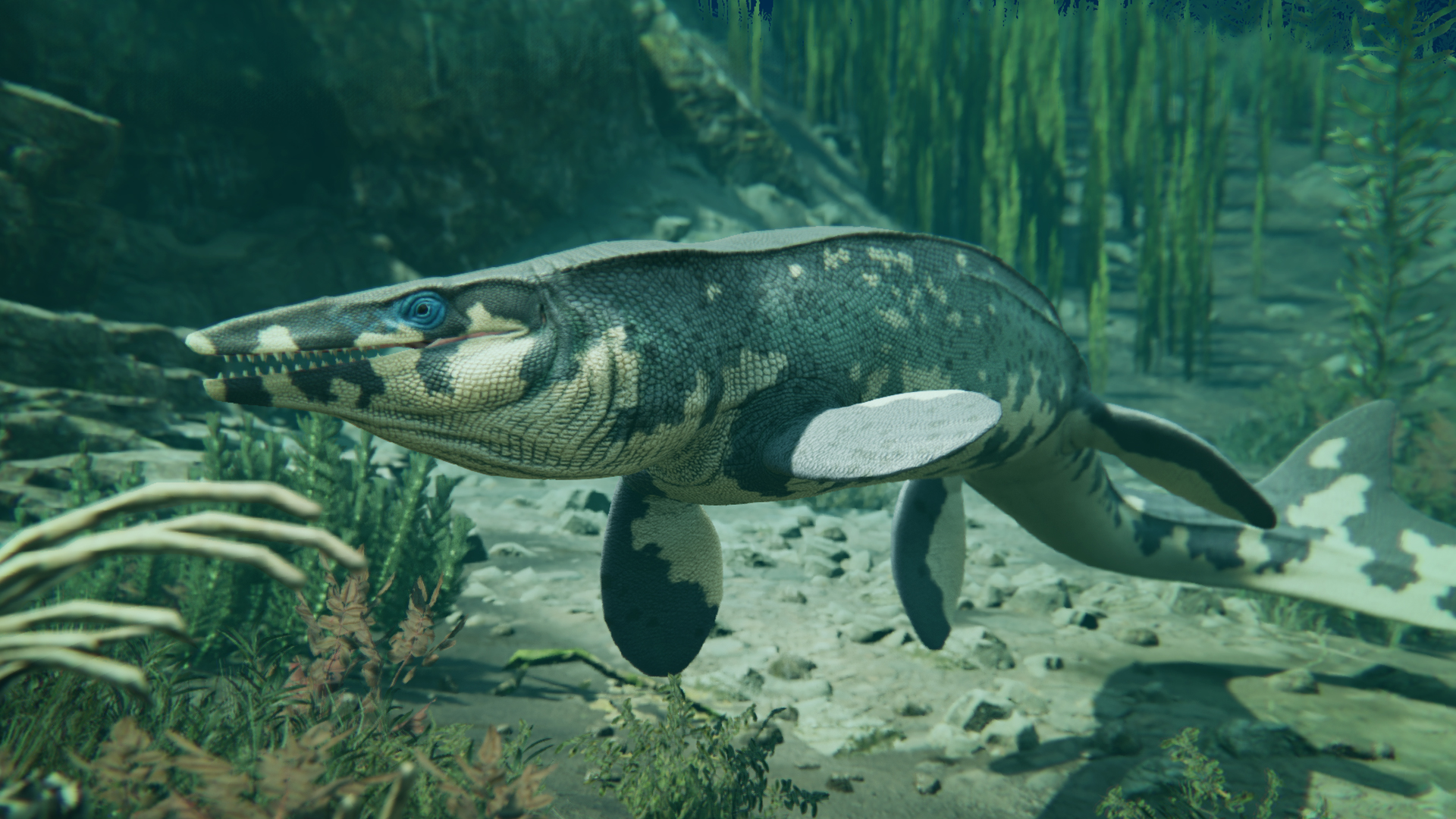
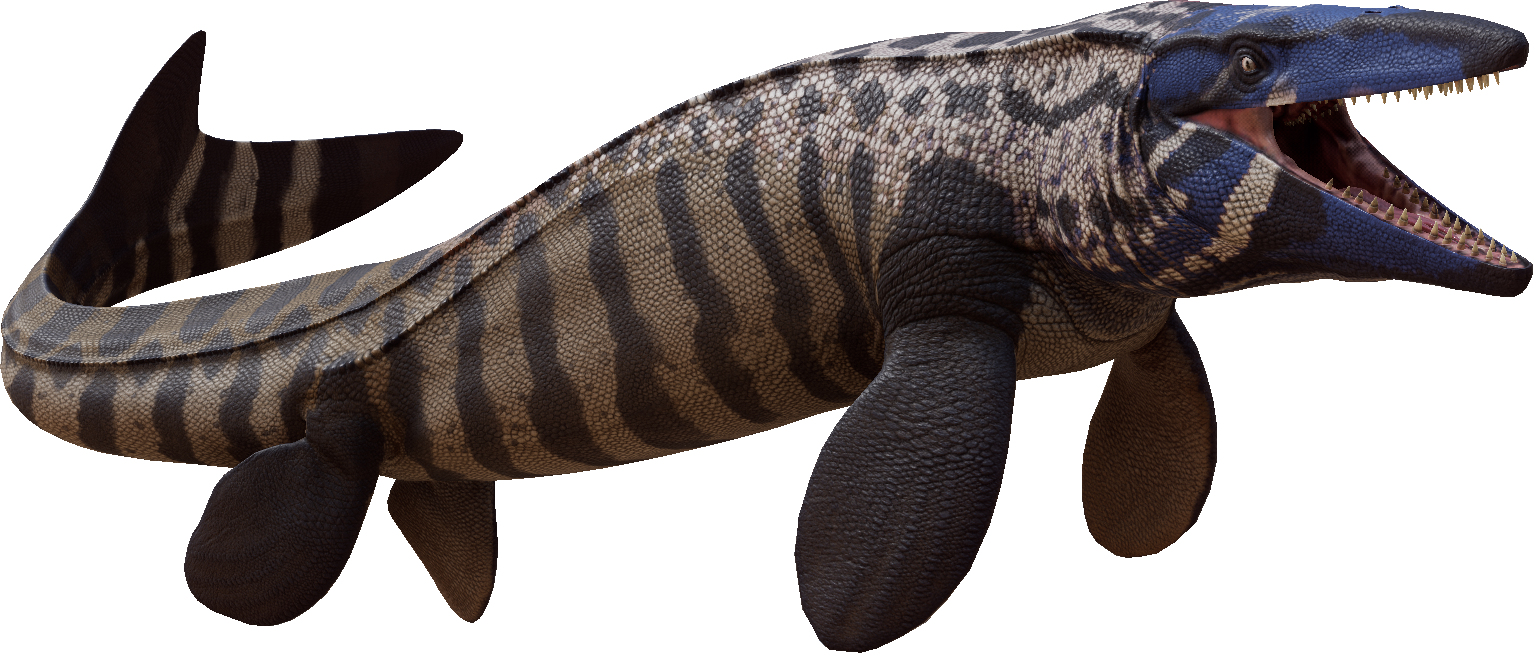
Hey everyone! We are excited to announce we have added a new fourth subspecies of Tylosaurus to Path of Titans, named Tylosaurus rex. This new update also comes with a new skin based on a diamondback rattlesnake, a desert dwelling reptile found in Texas, where this new subspecies has been described.
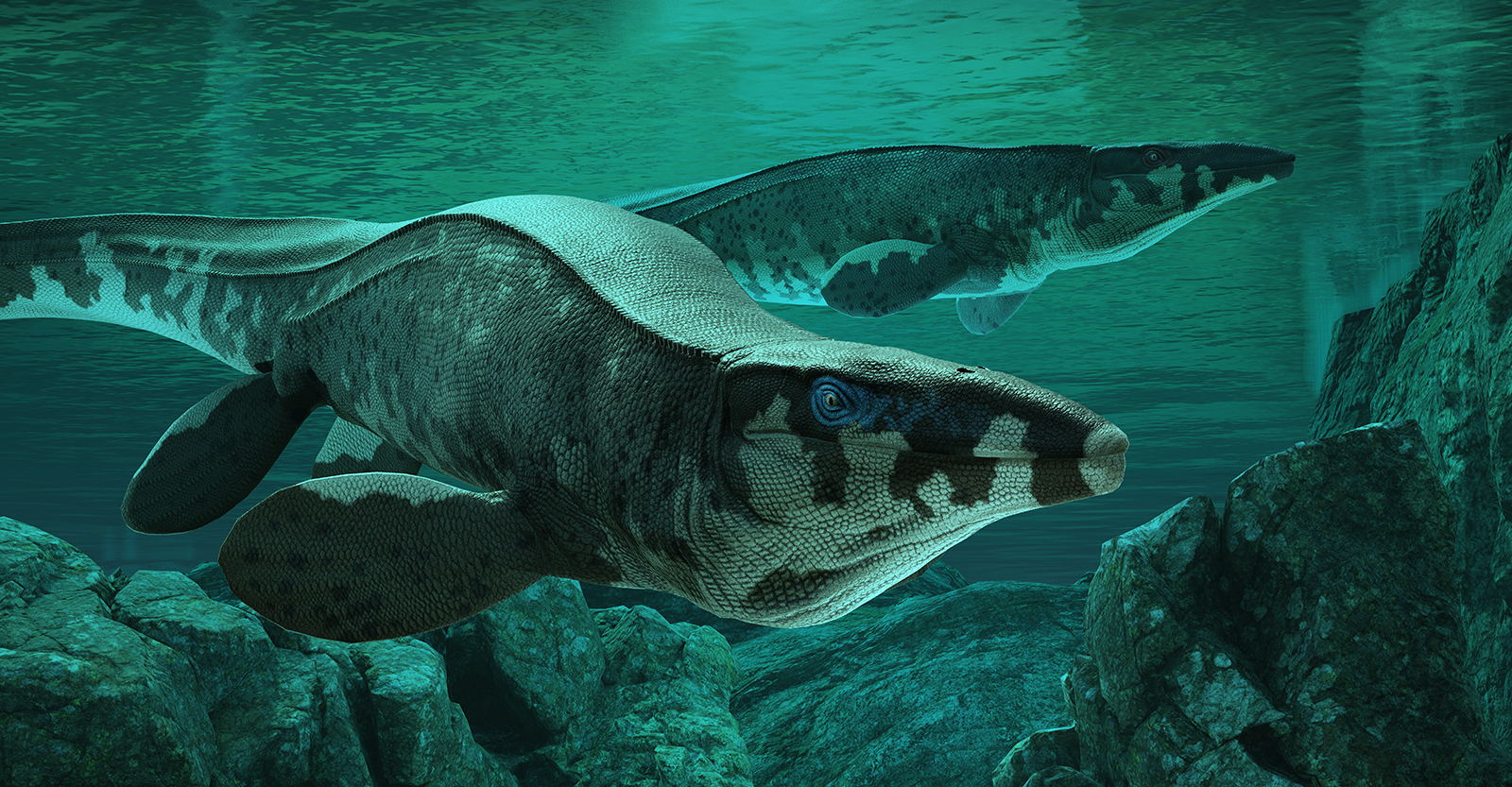
This update is in collaboration with Amelia Zietlow, Mike Polcyn, and Ron Tykoski at the American Museum of Natural History. Today they have just described a new species of Tylosaurus, named Tylosaurus rex, meaning "Knob Lizard King". Our original Tylosaurus model was reviewed and given feedback by Amelia and her team back in December before we released the Tylosaurus last year, and they have again provided feedback for this subspecies too! In-game, Tylosaurus rex is more stout with larger jowls compared to the other species. If you would like to read their full paper, it has been published as open-access on their website here: https://digitallibrary.amnh.org/items/dbbf9dc2-f0cb-40fc-87b2-a92791f3c3cc
And as if it weren’t cool enough to have such esteemed professionals in the field advising on this, we have Amelia herself with us today! She will be answering all your questions about this new species and its discovery as well as tons of insight into Tylo and Mosasaurs in general! Let's get straight into it!
An Interview with Dr. Amelia Zietlow
Alderon (A): Okay, first off, wonderful to meet you, Amelia, and amazing to have you here with us today to be sharing all things Tylo. So lets just jump straight into it: Tell us who you are and what you do.
Amelia Zietlow (Z): My name is Dr. Amelia Zietlow. I am a museum specialist at the castle in Appleton, Wisconsin. I am a paleontologist there. My primary job there is to design the natural history programming and exhibits for that museum. This discovery came out of my PhD research which was done at the American Museum of Natural History in their Richard Gilder graduate program. This work was done in collaboration with two other paleontologists, Mike Polcyn, who is a research fellow for Southern Methodist University in Dallas, Texas, and Ron Tykoski, who is the vertebrate paleontology curator at the Perot Museum of Nature and Science, also in Dallas, Texas.
A: Alright fantastic. So, what exactly did you do and what did your team discover here?
Z: So, we discovered a new species of Tylosaurus, Tylosaurus rex, Tylosaurus is a genus of Mosasaur. There they are a group of extinct marine lizards that lived at the very end of the age of dinosaurs. but unlike the other T-Rex that folks might be familiar with, this one is actually a lizard. Mosasaurs are related to modern monitor lizards, and snakes, things like komodo dragons and iguanas. so they are not at all related to dinosaurs. Not even close. They were adapted to live their entire lives underwater , so they have flipper-like limbs and a shark-like tail. They even gave live birth in the underwater just like whales do today. because reptile eggs can't breathe underwater. Tylosaurus Rex proves that everything is indeed bigger in Texas. It is one of the largest mosasaurs to ever live that we currently know of.
The largest individual is estimated to have been over 13 m or 40 feet long. They are set apart from other species by a unique combination of characters or anatomical traits that are overall associated with larger jaw and neck musculature. so various developments of bumps and lumps and other things on bones that are indicative of stronger muscles pulling on them. They're also characterized by serrated teeth, which are relatively unusual among mosasaurs. They were almost certainly the apex predators of the western interior seaway at the time in which they lived. They would have been generalists, so preying on anything and everything that they could get their mouths on.
A: Awesome. So why was it that you and your team were looking in this area in the first place, where this discovery was made?
Z: So, this discovery was a little bit of an accident. During my dissertation research, I was studying mosasaur variation. So, differences in the skeleton both within and between species. at the American Museum of Natural History, where I was doing my PhD, we have literally hundreds of mosasaur specimens. And I was just one day going through drawers, opening them up, looking to see what I could find. and I came across this single Tylosaurus specimen from Texas, which I had never seen before. Typically, Tylosaurus fossils are found in Kansas and South Dakota. I hadn't been aware at that point that they were found in Texas. And so, I thought that was kind of strange. and something just didn't sit right about it. I didn't actually know at first what it was about it that was different.
I did notice it had serrated teeth, and that's something that I had never seen in any Tylosaurus, so I thought that was strange. But teeth are one of those things that can be kind of variable within a species, so I wasn't expecting it to be a new species or anything. It was cataloged under an existing species called Tylosaurus Proriger. That is the type species that was the first one that was found and so it had been cataloged as that for literally decades. and I think sometime later I had a meeting with Mike Polcyn, and I remember mentioning to him that I thought this thing that we had at the AM&H from Texas looked kind of odd, but I couldn't quite place why. He got really quiet because he had already been working on this project for some time. so I think at that time he might have told me that it was distinct or he might have asked a couple of leading questions. I don't quite remember, but ultimately we wound up working on it together. There is a large collection of these specimens at Southern Methodist University where he's affiliated, but there's also quite a few of them at the Perot Museum. so that is where my other co-author Ron Tykoski is involved. So the three of us got together, talked about these specimens in Dallas. I made several trips to Texas to study them in, so I took photographs and measurements of them. They're unfortunately a little bit too big to put in most CT scanners because they're big lizards. so most of it had to be kind of old school physical comparison between different specimens.
This species is set apart by having a pretty good sample size as far as fossil reptiles go. We have just over a dozen specimens and they range in completeness from a couple of bones to partial, to nearly, complete skeletons. So we have a very good idea of what this entire animal looked like which is pretty incredible.
A: Super incredible. Yeah. Wow. As a side note, that’s so funny that the both of you stumbled upon something going on there at the same time. So personally on your end what was your reaction to the discovery?
Z: I was really excited when we realized that it was a new species. It's always exciting when you discover new species of animals, but for me personally, Tylosaurus is my favorite genus of Mosasaur. I just think they're gorgeous. They're also very good models for research. And that's why a lot of my dissertation research has actually focused on them as a group because they are so common. Well, so at Kansas University's Museum of Natural History, there is this huge skeleton mounted from the ceiling right when you walk in. That specimen is nicknamed bunker.
it’s never really been studied up close. because the bones are kind of crappy. They're kind of crusty and gross. And I remember studying it and it's so big. literally the skull is as long as I am tall. It's a huge animal. It's awesome. And I remember thinking to myself, it'd be really funny if this was a different species if we named it T-Rex because it is so big. and so working on this Texas thing, we were already kind of nicknaming it Tex, like big Tex, before we had a formal specimen species name.
It's essentially if you took a Mosasaur if you took a Tylosaurus and made it bigger and badder in every way. They're 30, 40 feet long with serrated teeth. They're awesome. and I think the largest individual is in fact larger than Tyrannosaurus Rex, just by a couple feet, but it does beat it out just slightly.
This species is actually supported by multiple independent lines of evidence that it is a distinct species. So, we had the anatomical evidence, so the characters that they actually share in common, but we also have a really good record of when they lived. So, some of the fossils were found over 100 years ago, but some of them were found quite recently. And so, they have good Stratigraphic dating data with them. So, in other words, we know exactly how old they are. And they're about 80 million years old, give or take.
What's funny about Bunker, the specimen in Kansas, is that it was found in Kansas. It wasn't found in Texas at all, but because it is from rocks that are the same age as these Texas specimens and it has all these characteristics in common, we can be pretty confident that it is in fact this species and not an existing species.
A: Gah wow. That’s just like. This whole previous section is going to be the most played on youtube, for sure. Okay so here is the big question then, how does this new discovery impact the study of Tylosaurus, like, as a whole?
Z: It's super important for a number of reasons, which also makes it more exciting to me. I mean, first of all, it helps to paint a better picture of how diverse these animals were. So another reason that I focused on Tylosaurus a lot in my work so far is that a lot of folks have kind of written it off as the boring one of the group. So Mosasaurus are quite diverse. There are three or four main families of them, if you will. that are all very distinct anatomically and in fact they seem to have evolved flippers independently. So they're all mosasaurs. They're all related, but they've gone through this aquatic adaptation process independently from one another, which is pretty crazy. So they all independently get flippers. They all independently develop large body size. and a couple other characters as but Tylosaurus is the only one. So all the other groups diversify into a whole wide range of niches. They're basically, pick a prey and there's one of them specialized for it, but Tylosaurus essentially showed up on the scene about 95 million years ago and decided it ain't broke, don't fix it. And they persist for 20-some million years relatively unchanged, and essentially what my research is discovering is that these things are a whole lot more diverse than they've been given credit for. So T-Rex is just one example of that. all of the animals in our sample of T-Rex are huge. The smallest one is 25 ft long. So I wouldn't call it a baby, but there is some anatomy present in that individual and some of the other quote unquote smaller individuals that is different from what we see in the larger ones.
so overall, Tylosaurus Rex is painting a much clearer picture of Tylosaurus more broadly as an animal about its biology, its ontology. and then beyond that this paper provides two new data sets that other researchers can use to understand not only these animals but their relatives as so the first of those is my entire measurement data set from my PhD. So during my time at the American Museum, I visited over 22. So during my time at the American Museum, I visited 22 museums in North America and Europe, collecting data from over 300 Mosasaur specimens. And all of that measurement data is included in the supplemental data of this paper, which is open access with the paper itself. So anybody can use this paper not only as a reference for the anatomy of these animals, but they can also download that measurement data and do their own research literally come up and come up with and test their own hypotheses with that data.
And then the other thing that we did was that we fully revised the existing data set that is used to understand mosasaur relationships mosasaur evolutionary relationships. So, there was a lot of regions of the Mosasaur skeleton that were under-sampled, so myself and my co-authors have seen lots of mosasaurs and so we added in some of those new observations to this data set. And what's really cool is that even though our sample was limited to just tylosaurines, so the family of tylosaurs, we got a very different structure of their relationships than has ever been recovered before. So there's a couple interesting things about it and I would still call it a preliminary result because it's not the full tree of mosasaurs. We only have a couple out groups in there that are just kind of for a point of reference.
I don't know but yeah, we'll see where this thing goes when we actually plug the entire data set into it.
A: jeeze wow. okay second, second most replayed section on the youtube video. Thank you so much for just sharing just immense amounts of just wonderful data there. My goodness. Okay so next question. Big picture, do you have any feelings about how this relates to the broader implications of mosasaur research in general and do you have anything else that you are working on in that area?
Z: So the broader implications of this work for future Mosasaur research are that I think these things are a lot more diverse than folks have historically given them credit for. There's two reasons for that. I think one is that people studying mosasaurs at this level of rigor is relatively recent. So there haven't been many mosasaur specialists throughout history in the same way that there have been dinosaur specialists and mammal specialists and that kind of thing, so I think as more people fall in love with these animals and decide to study them we'll discover a lot more.
There was a lot of overcorrection in terms of, synonymizing or sinking multiple species into one. So historically, mosasaurs were collected during the bone wars era, so there was a lot of not following the rules, if you will, in terms of what when you should name new species. So then, about a couple decades ago, we started to swing the other way as a field of science where folks were revisiting those specimens and kind of cleaning up the names that didn't have a lot of evidence backing them up, but I think at some point the pendulum swung a little too far and a lot of species were all sunk into too few species.
So I have some other work that should be out relatively soon, one of them more soon than others where we are again revisiting which specimens should actually belong to which species which should be considered to be new. It's all giving us a better picture of their evolution, of their diversity in the ecosystem, and their interactions with other animals, things like that. So, it's an exciting time to be researching mosasaurs.
A: No kidding, wow perfect, thank you. Okay, final question. If there is one main take away you would want listeners to come away with today, whether related to the discovery specifically or this broader topic in general, what would that be?
Z: I think there's two main points that I would love for people to take home with them. One is that old school comparative anatomy is still important. So a lot of the techniques we used here weren't super high tech. It was a lot of laying different bones out on a table and thinking about them for a couple of hours and really doing that kind of old school comparison. Revisiting museum collections. So, existing collections are really really really important. There's a lot of stuff in there that is worth revisiting. It doesn't have to all be new fieldwork, and then the other thing I haven't really talked about yet so far is that a lot of these specimens were actually dug up by avocational paleontologists. They were not dug up by professional museum crews.
So these were folks that literally found them in their backyards and then worked with the museum to have them collected and stored properly and they then donated them to the museum so that they could be accessible for research for display. A lot of them were also prepared by volunteers, so folks coming into those museums on their free time to work on them to clean the sediment up, so that folks like me can come through and understand these animals in this way.
A: Perfect note to end on. Amateur paleontologists please take note. Huge thank you to Doctor Amelia obviously, for answering all of our questions and being so generous with her time and knowledge today. It was great having you on and we are all very excited to see what comes from you and your team next.
Z: Thank y’all for listening. Hope you enjoy the model and goodbye.
A: We hope players enjoy this new Tylosaurus Subspecies, and we’ll see you soon.